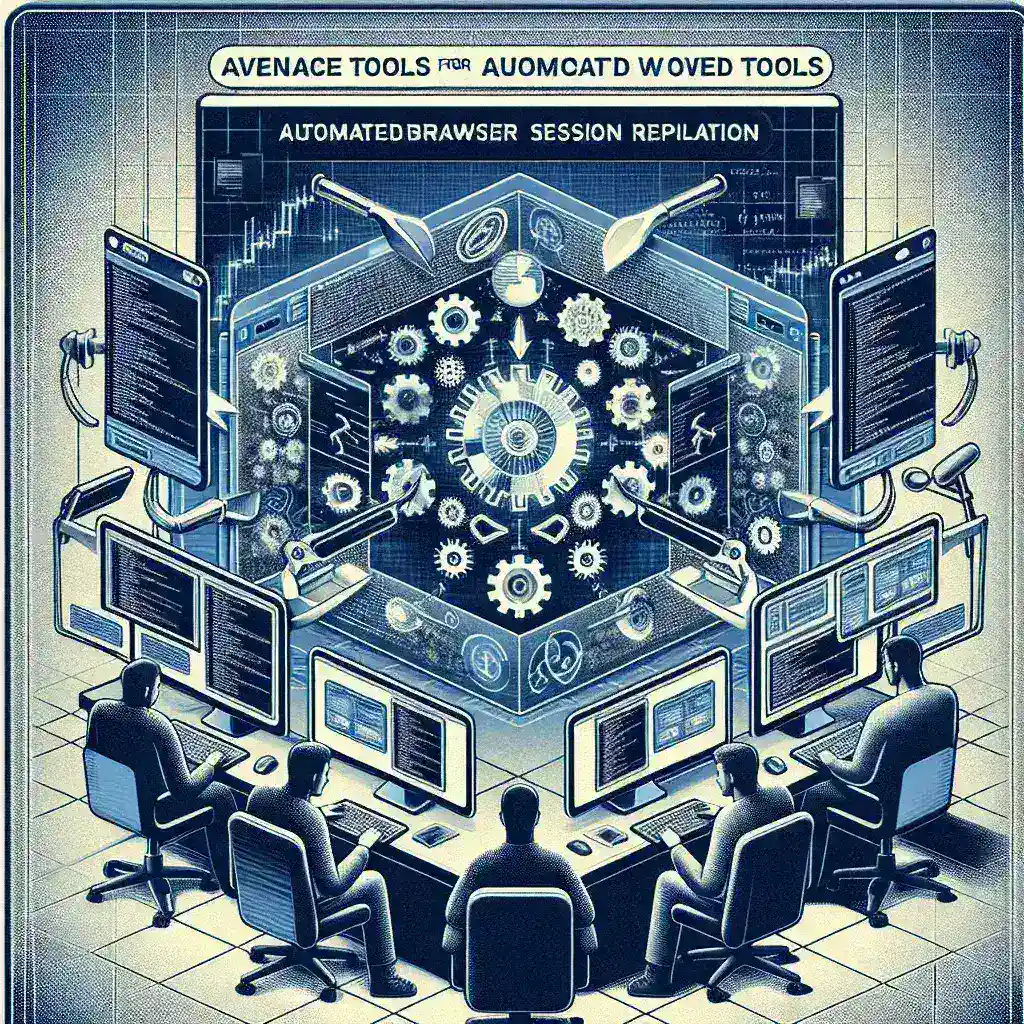
Advanced Tools for Automated Browser Session Replication: A Comprehensive Guide for Developers and Testers
In today’s rapidly evolving digital landscape, ensuring consistent user experiences across multiple browsers and platforms has become a critical challenge for developers and quality assurance teams. Automated browser session replication emerges as a revolutionary solution that enables professionals to recreate user interactions, test scenarios, and debug issues with unprecedented precision and efficiency.
Understanding Browser Session Replication
Browser session replication refers to the process of automatically recording, reproducing, and analyzing user interactions within web browsers. This technology captures every click, keystroke, scroll, and navigation action, creating a comprehensive digital footprint that can be replayed multiple times across different environments. The significance of this capability extends far beyond simple testing, encompassing user experience optimization, performance analysis, and cross-platform compatibility validation.
Modern web applications must function flawlessly across numerous browsers, operating systems, and device configurations. Traditional manual testing approaches prove inadequate when dealing with the complexity and scale of contemporary digital products. Automated session replication tools bridge this gap by providing systematic, repeatable, and scalable testing methodologies.
Leading Automation Frameworks and Tools
Selenium WebDriver
Selenium stands as the industry standard for browser automation, offering robust capabilities for session replication across multiple programming languages. Its comprehensive ecosystem supports Chrome, Firefox, Safari, and Edge browsers, making it an invaluable tool for cross-browser testing scenarios.
The framework’s strength lies in its mature architecture and extensive community support. Developers can leverage Selenium Grid for distributed testing, enabling parallel execution across multiple machines and browser configurations. This scalability proves essential for organizations managing large-scale web applications with diverse user bases.
Puppeteer and Chrome DevTools Protocol
Google’s Puppeteer represents a modern approach to browser automation, specifically designed for Chromium-based browsers. This Node.js library provides high-level APIs for controlling headless Chrome instances, offering exceptional performance and detailed debugging capabilities.
Puppeteer excels in scenarios requiring detailed performance metrics, screenshot generation, and PDF creation. Its integration with Chrome DevTools Protocol enables developers to access low-level browser functionality, making it ideal for advanced session replication tasks that demand granular control over browser behavior.
Microsoft Playwright
Playwright emerges as a comprehensive cross-browser automation solution, supporting Chromium, Firefox, and WebKit engines. Microsoft’s contribution to the automation ecosystem addresses many limitations of existing tools by providing consistent APIs across different browser vendors.
The framework’s unique selling proposition includes reliable element selection, automatic waiting mechanisms, and built-in mobile device emulation. These features significantly reduce the complexity of maintaining automation scripts while improving test reliability and execution speed.
Specialized Session Recording Solutions
Browser-Based Recording Extensions
Several browser extensions specialize in capturing user sessions for later replication. Tools like Selenium IDE, Katalon Recorder, and TestCafe Studio provide user-friendly interfaces for recording interactions without requiring extensive programming knowledge.
These solutions typically generate reusable scripts in various formats, including Selenium WebDriver commands, TestCafe scenarios, or proprietary formats. The accessibility of these tools democratizes automation testing, enabling non-technical team members to contribute to quality assurance efforts.
Cloud-Based Testing Platforms
Services such as BrowserStack, Sauce Labs, and LambdaTest offer comprehensive session replication capabilities through cloud infrastructure. These platforms eliminate the need for maintaining local testing environments while providing access to extensive browser and device matrices.
Cloud-based solutions excel in scenarios requiring testing across numerous configurations simultaneously. They typically include features like visual regression testing, performance monitoring, and detailed session recordings with video playback capabilities.
Implementation Strategies and Best Practices
Script Maintenance and Reliability
Successful automated session replication requires careful consideration of script maintenance strategies. Dynamic web applications frequently change, potentially breaking automation scripts that rely on specific element selectors or page structures.
Implementing robust selector strategies, such as using data attributes specifically designed for testing, significantly improves script longevity. Additionally, incorporating explicit wait conditions and error handling mechanisms enhances script reliability across different execution environments.
Data Management and Test Isolation
Effective session replication often involves managing test data and ensuring proper isolation between test runs. This includes strategies for database seeding, user account management, and cleanup procedures that maintain consistent starting conditions for each replication cycle.
Consider implementing data-driven testing approaches that separate test logic from test data, enabling the same session replication scripts to work with various input scenarios. This methodology improves test coverage while reducing maintenance overhead.
Advanced Capabilities and Emerging Trends
Machine Learning Integration
Modern session replication tools increasingly incorporate machine learning algorithms to improve element detection, predict user behavior patterns, and automatically adapt to application changes. These intelligent systems can identify when interface modifications occur and suggest script updates accordingly.
Some platforms utilize computer vision techniques to identify elements based on visual appearance rather than traditional DOM selectors, providing more resilient automation scripts that survive minor interface modifications.
Real-Time Collaboration Features
Contemporary tools emphasize collaboration between development, testing, and product teams through shared session recordings, collaborative debugging sessions, and integrated reporting mechanisms. These features facilitate knowledge sharing and accelerate issue resolution processes.
Performance Considerations and Optimization
Automated browser session replication can consume significant computational resources, particularly when executing large test suites or performing parallel testing across multiple browsers. Optimizing execution performance requires strategic approaches to resource management and test organization.
Implementing headless browser execution for scenarios that don’t require visual validation dramatically improves execution speed and reduces resource consumption. Additionally, organizing tests based on execution time and dependencies enables more efficient parallel execution strategies.
Monitoring and Analytics
Comprehensive monitoring capabilities provide insights into test execution patterns, failure rates, and performance trends. These analytics enable teams to identify problematic areas, optimize test coverage, and make data-driven decisions about testing strategies.
Integration with continuous integration pipelines ensures that session replication occurs automatically as part of the development workflow, providing immediate feedback on potential regressions or compatibility issues.
Future Outlook and Technological Evolution
The landscape of automated browser session replication continues evolving rapidly, driven by advances in web technologies, browser capabilities, and testing methodologies. Progressive Web Applications (PWAs), single-page applications (SPAs), and complex JavaScript frameworks present new challenges that require sophisticated replication strategies.
Emerging technologies such as WebAssembly, advanced CSS features, and new browser APIs necessitate continuous adaptation of automation tools and techniques. The industry trend toward microservices architectures and distributed systems also influences how session replication tools integrate with broader testing ecosystems.
As artificial intelligence and machine learning technologies mature, we can expect session replication tools to become more intelligent, self-healing, and capable of autonomous test generation based on user behavior analysis.
Conclusion
Automated browser session replication represents a fundamental shift in how organizations approach web application testing and quality assurance. The tools and techniques discussed in this comprehensive guide provide the foundation for implementing robust, scalable, and maintainable automation strategies.
Success in this domain requires careful tool selection based on specific project requirements, implementation of best practices for script maintenance and data management, and continuous adaptation to evolving web technologies. Organizations that invest in comprehensive session replication capabilities position themselves to deliver superior user experiences while maintaining development velocity and reducing quality-related risks.
The future of web application development increasingly depends on sophisticated automation capabilities, making proficiency in browser session replication tools an essential skill for modern development and testing professionals.